

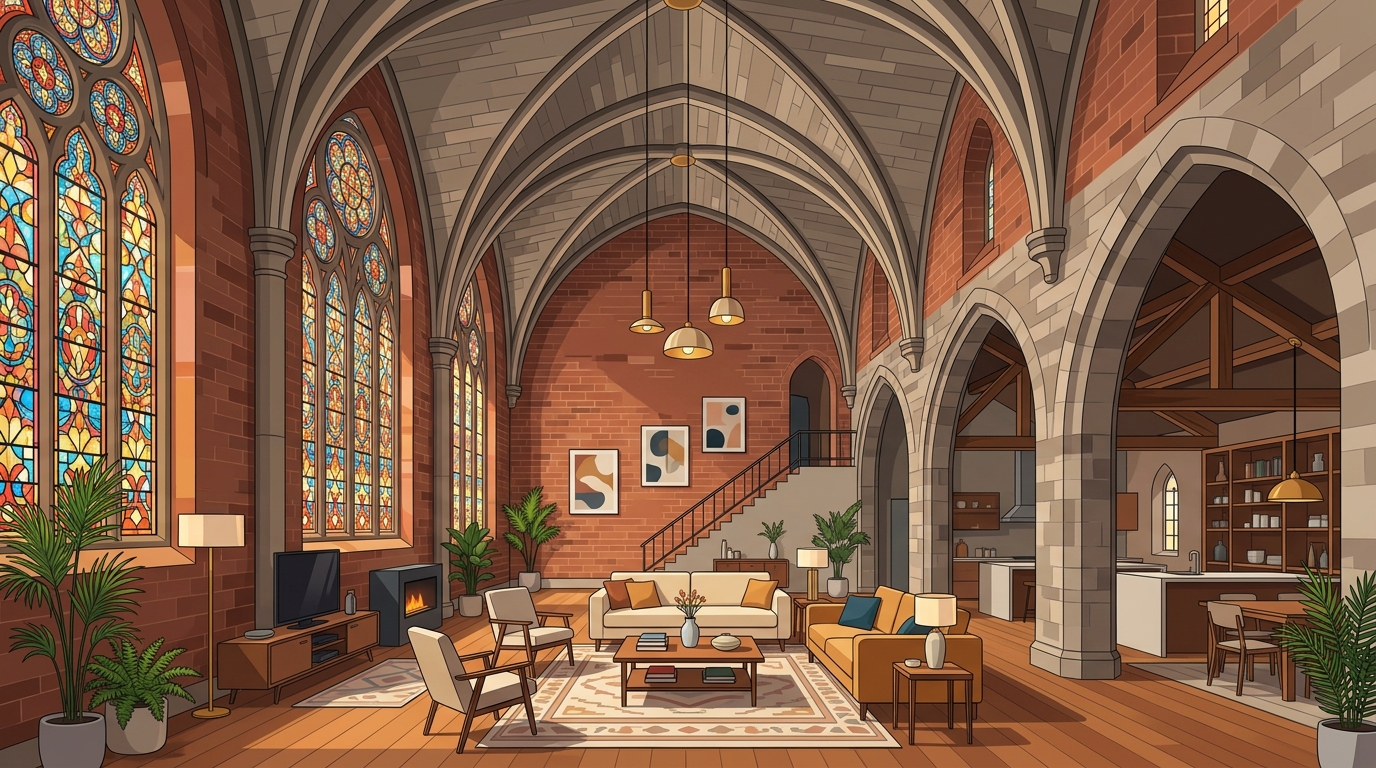
Vaulted ceilings, majestic stained glass windows, and massive brick walls. Former churches and chapels scattered around the world are increasingly finding a new, secular life. It is an extraordinary feeling to live in a space that for decades, or even centuries, served the local community as a place of reflection and gathering.
Transforming such buildings requires immense respect for the past and a great deal of patience. A perfect example is a 16th-century Basque church near Bilbao, Spain. Ruined, abandoned in the 1970s, and overgrown with wild vegetation, it was discovered by an architecture enthusiast who embarked on a three-year renovation. Architects carefully restored its former glory, subtly blending historic stone walls with modern comfort.
Meanwhile, in sunny San Francisco, a majestic 1915 Neoclassical structure has become a luxury address known as The Light House. The original exposed brick walls and 30-foot cathedral ceilings were carefully preserved. Spacious living areas have been arranged in the former main nave, where daylight softly diffuses through surviving colorful glass.
Adapting sacred buildings is not just an interesting architectural trend, but primarily a way to rescue forgotten monuments. Today, these monumental interiors no longer overwhelm with their solemnity. They have become warm, safe havens where grand history naturally intertwines with the rhythm of everyday life.